
Belonging by Design
Horses and human connection

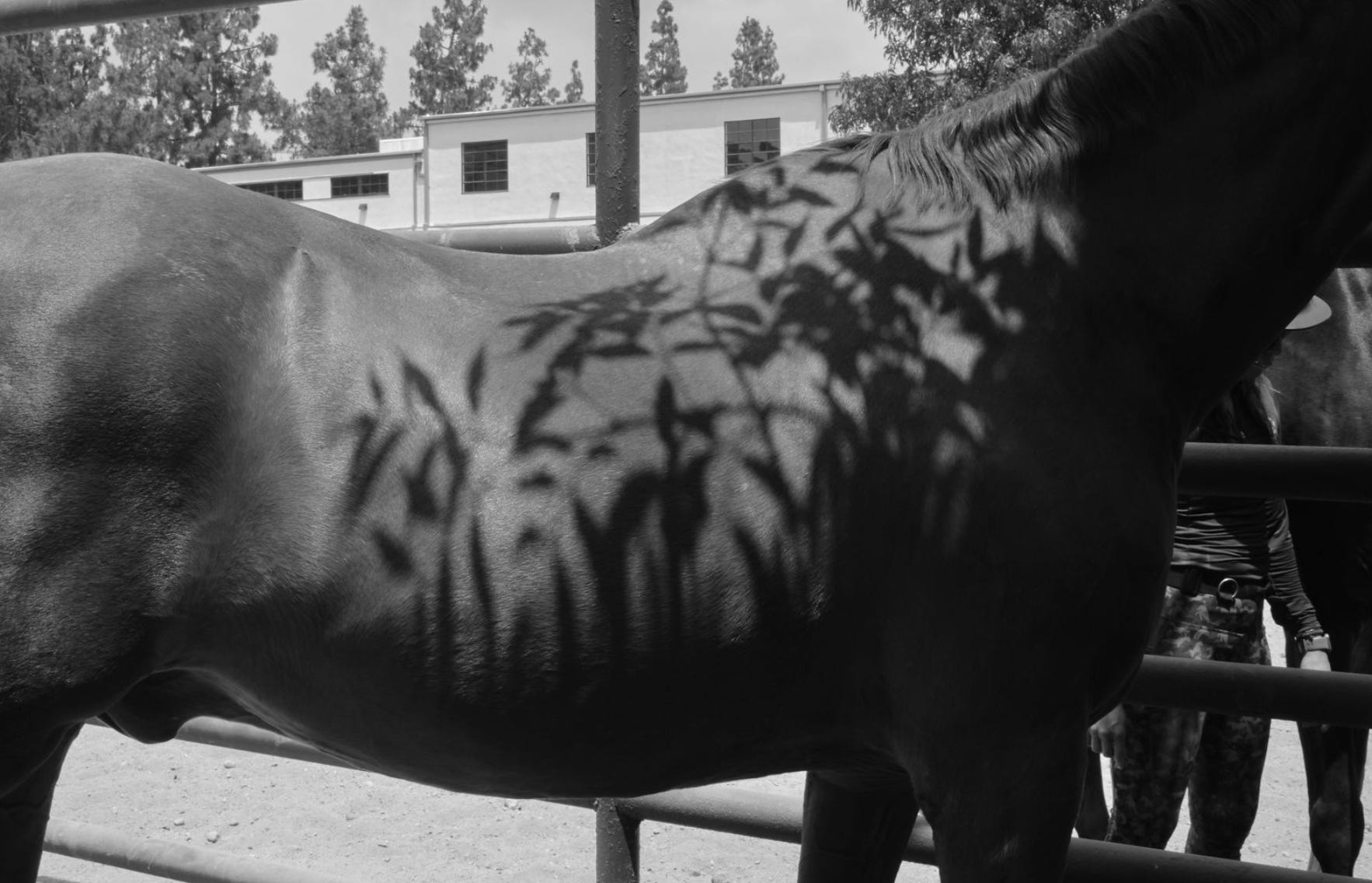
Second Hand Method creates space and introduces different wellness experiences to people. It’s a concept that has just launched, connecting humans and hearts, an energetic village. The BEGIN event included a soundscape held together by The Bala Boys, a Singaporean musical duo whose Tibetan singing bowls vibrated at different frequencies, occasionally threaded with humming and chanting. The sound connected all of us, a constant hum in the backdrop. A living, breathing through-line.


I was a stranger to most of the people who arrived that morning. My mother came, and of course, I knew people from Lincourt Stables, home to our equine and learning partners. Still, the other participants who arrived were either connections of Lauren and Rachel, co-founders of Second Hand Method, media, or referrals. We had no shared history. No shorthand. No reason, yet, to trust one another.
By the end of the morning, something had shifted. That shift didn’t happen by accident. It happened by design.
Unbridled Rising (UR) was the core of the BEGIN experience for a reason that goes deeper than aesthetics or novelty.
But to explain why, I have to go back a little further.
I’ve been writing about this elsewhere — in A Life Devoted, a Substack that was always meant to capture the concepts I explore in a book I’ve been working on: Side Effects May Include. My book and UR are two expressions of the same reckoning.
The book is the root system. Unbridled Rising is what grew from it.
That reckoning usually begins with horses. Not all at once, but accumulated, over years, one encounter at a time, each one shifting something I thought I understood about myself and then shifting it again. Horses kept returning me to the same humbling truth: I was not as present, as regulated, as honest about my own internal state as I believed I was. They knew before I did. Every time. The body I had learned to perform around, to manage, to override. Horses saw through it immediately. And something in that seeing began, slowly, to change me.
That cellular, re-grounding presence is is mechanism. And it is why I founded UR. It is why Lauren felt the resonance immediately, why Second Hand Method partnered with us, because some truths land in the body before they land in the mind, and horses have a particular gift for delivering them.
The themes I keep returning to in the book are the ones that keep showing up in the program, because they are, I now understand, the same inquiry about what self-silencing does to our bodies over decades. Generational trauma carried forward, then compounded or interrupted. The weaponization of belonging and its long shadow on our health. The particular experience of being a woman in this society and in our medical system. And finally, how a personal health crisis forced a pause that unfurled into the slow, nonlinear, often humbling process of healing.
Unbridled Rising is where I bring that understanding to different people at different stages in their lives. But especially to young people, before the decades of accumulated silence, before the body begins to demand a reckoning of its own.
The horse responds to our nervous systems, to the buzzing happening inside rather than to how we think we’re showing up. A human tends to respond to how we present ourselves: on social media, in a boardroom, at home. Performing fine is not an option when working alongside a horse.
Horses are prey animals whose survival has always depended on accurate, real-time reading of the physiological states of beings around them. They are, in the most precise sense, living biofeedback instruments, helping participants become aware of their internal states in a way that is immediate and impossible to ignore or override.
The science that speaks to why and how this happens is well understood. Polyvagal Theory describes how the ventral vagal state, the physiological signature of safety, connection, and learning readiness, is not something a person can think themselves into. It must be felt. And it is most reliably accessed through co-regulatory relationship. The horse, operating from its own well-regulated social nervous system, helps to establish the conditions for that state to emerge in the human beside it. The facilitator, offering trauma-informed presence, helps too. But the horse is not passive in this dynamic. Horses are not mirrors. Calling a horse a mirror implies passivity, and passivity is precisely what’s missing from most of what we offer people seeking belonging. The horse’s active agency, its discernment, its choice to engage or disengage, is what makes the encounter generative.
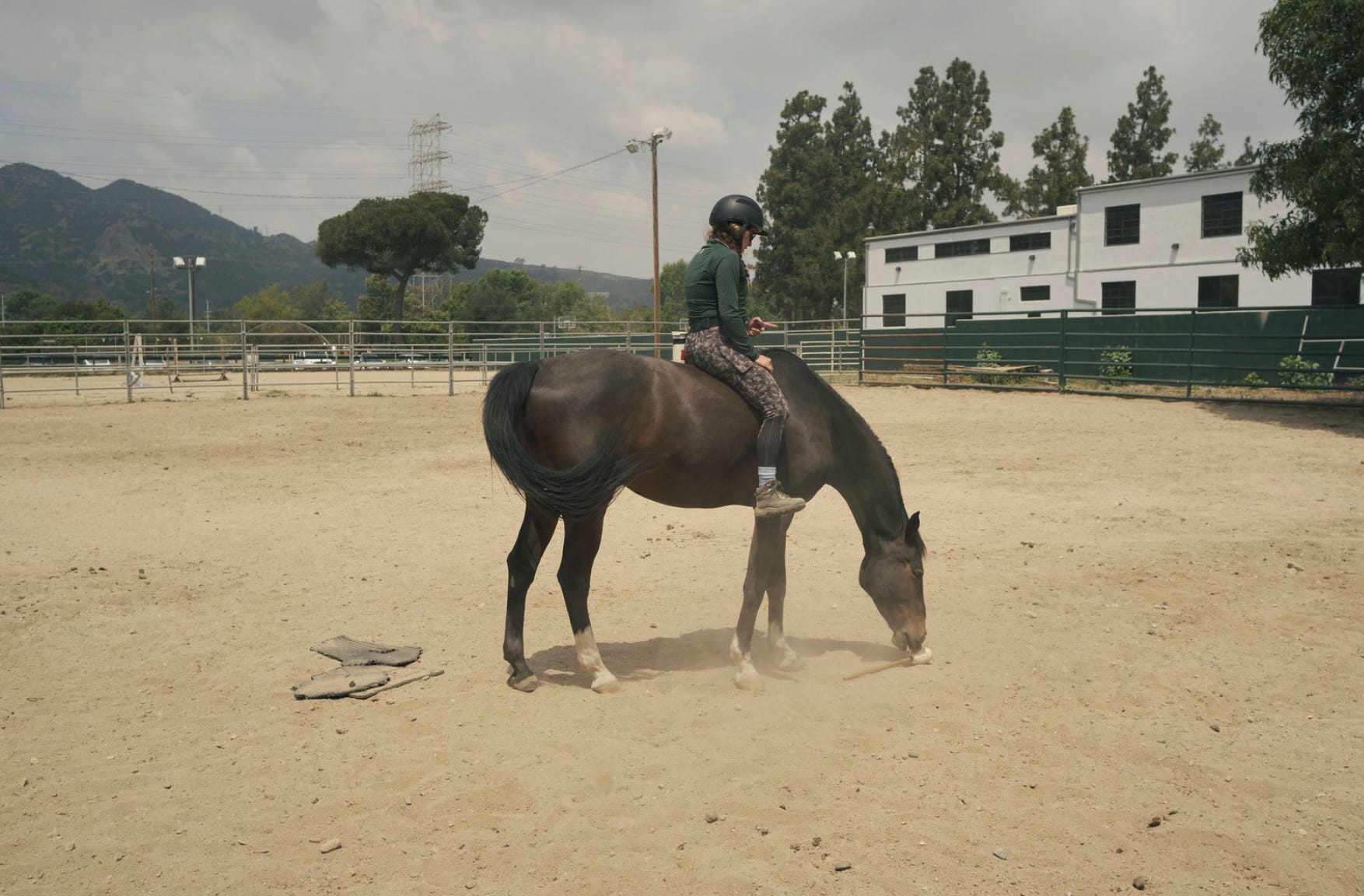
The partnership-over-dominance paradigm deepens this mechanism. A horse trained through positive reinforcement, through clarity, consistency, and the genuine experience of being heard and respected, brings an entirely different quality of presence to the relationship. It is not bracing for correction. It is not compliant through suppression. It is available, curious, and engaged. That quality of authentic engagement is what makes co-regulation possible at its highest level.
What does any of this have to do with belonging?
The short answer is: everything.
Surgeon General Vivek Murthy, in his work on the loneliness epidemic, argues that belonging is not a luxury. Rather, it is a biological necessity. His Together framework describes how human beings are wired for connection, and how the absence of it registers in the body as threat. We don’t simply feel lonely. We become dysregulated. Our immune systems weaken. Our nervous systems brace. The cost of disconnection is physiological, not merely emotional.
Brené Brown’s research on vulnerability points to something adjacent and essential: true belonging, the kind that heals, requires that we show up as we actually are, not as a curated, performative version of ourselves. Brown distinguishes between fitting in and belonging. Fitting in, she writes, requires changing who you are. Belonging requires being accepted for exactly who you are. These are not variations of the same experience. They are opposites. And most of us, most of the time, are practicing fitting in while quietly starving for belonging.
Todd Rose’s work on individuality and conformity adds another layer. In Collective Illusions, Rose demonstrates that people routinely silence their authentic preferences and beliefs because they believe, incorrectly, that everyone else feels differently. We perform consensus. We suppress divergence. And over time, this self-silencing extracts a profound cost: internal conflict, chronic cortisol elevation, anxiety, disconnection from self. The research on self-silencing links it directly to depression and cardiovascular disease. We are literally making ourselves sick trying to fit into a social reality that may not even exist.
Mia Birdsong, writing and speaking about community and liberation, offers perhaps the most honest frame of all: belonging is not something that happens to us in ideal conditions. It is something we build, actively and intentionally, in relationship with one another, especially across differences. It requires courage. It requires infrastructure. And it requires someone to create the conditions for it.
BEGIN was that infrastructure.


What Second Hand Method did so well, and what made the collaboration so generative, was to frame nature not as backdrop but as participant. The sound held the space. The horses held our presence. The morning moved us through something that couldn’t have been rushed or scripted: a gradual, embodied arrival into ourselves and into one another.
The research on optimal anxiety, the zone in which challenge is high enough to engage and low enough to stay regulated, describes exactly what experiential learning with horses activates. We were in it. Laughing. Curious. A little uncertain. Fully present. That heightened aliveness is not incidental to connection. It is the condition for it. Joy, it turns out, is a nervous system event. When we experience it together, we become, briefly, co-regulated. And co-regulation is the biological foundation of trust.
That our connections were premised in joy matters. Not the performed joy of a team-building exercise or TikTok shares, but the real thing, arrived at through encounter with animals who cannot be fooled, in a space designed to make authenticity feel safe rather than risky.
This is what horses make possible that almost nothing else does. They collapse the performance. They render self-silencing ineffective. They create the conditions in which who you actually are becomes, not just acceptable, but necessary.
The equine-assisted services industry has only just begun, even though it’s been around for over fifty years. It has operated largely as a cottage industry, with the evidence and clinical validation of its effective methodologies remaining incomplete, siloed, or limited to extreme use cases. The field has, until recently, undersold itself.
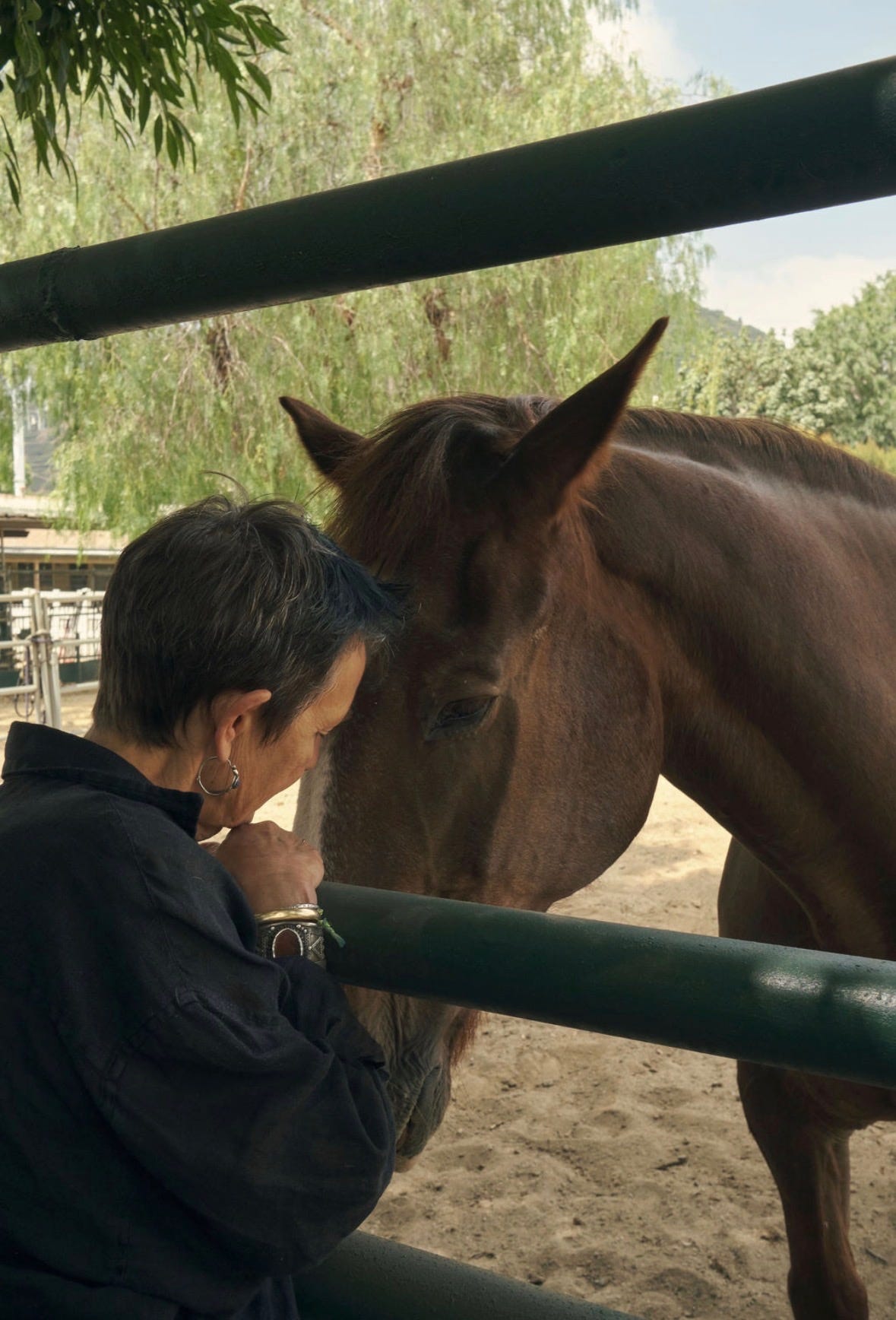
UR envisions a world in which the horse-human relationship is recognized not as a niche therapeutic modality, but as one of the most sophisticated, evidence-grounded co-regulatory environments available for nervous system healing, authentic self-discovery, and the cultivation of genuine belonging.
The trillion-dollar global wellness industry is converging on a single insight: chronic nervous system dysregulation, compounded across a lifetime, is the common root beneath the stress epidemic, the loneliness epidemic, and the mental health crisis. Breathwork, somatic therapy, mindfulness, cold exposure, and psychedelic-assisted treatment have all entered the mainstream in pursuit of a return to felt safety and present-moment awareness.
Horses have been offering this outcome for millennia. What has been missing is the infrastructure to deliver it at scale - with rigor, with outcomes data, and within an ethical framework that honors both the human and the animal.
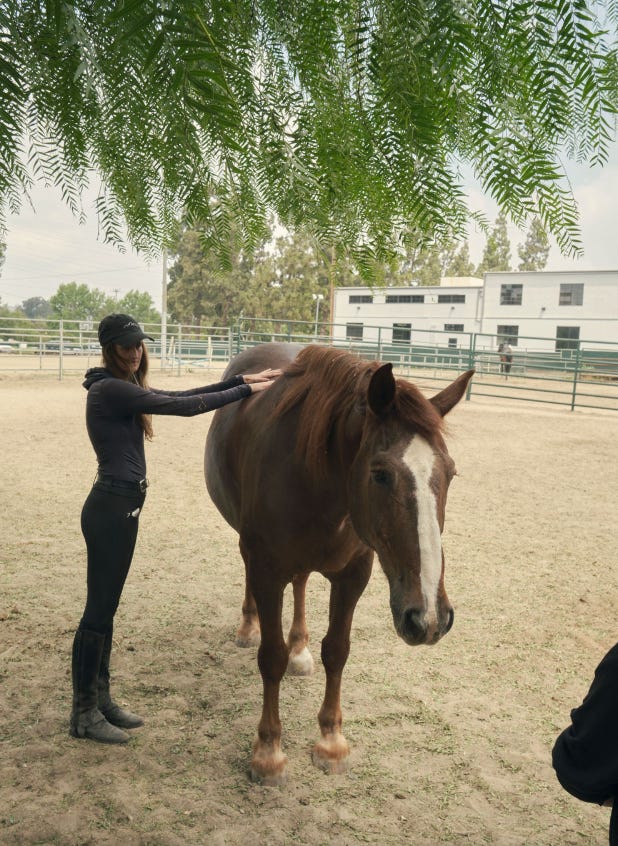
BEGIN was a proof of concept for some of that infrastructure. A morning in which strangers became, briefly, something more. In which the science of belonging and the art of equine partnership converged into something that felt true.
Unbridled Rising is building that infrastructure, intentionally and at scale.
We are not building a barn experience. We are building the conditions for belonging.
Su another very insightful chapter on this journey. Awesome to see the impact your work is making. Keep up the great work. Thank you so much.
Su, you are a beautiful writer. Your work is so well informed. Thank you for this. ♥️